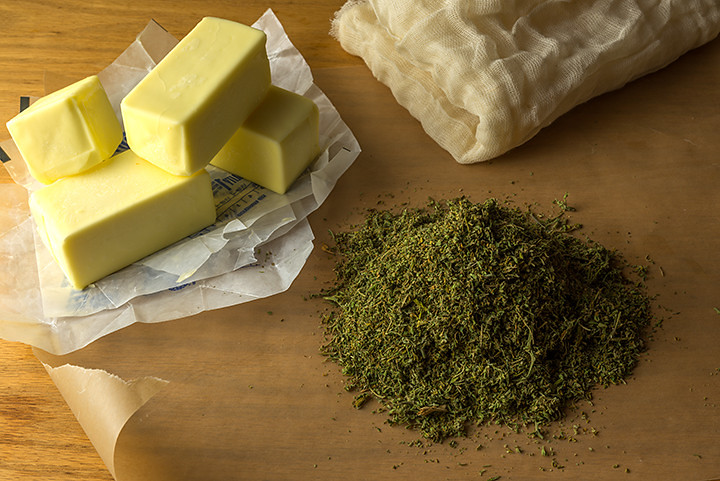
Cannabutter is the ingredient that gives an edible its power. It’s one of the simplest and most versatile ways to infuse foods with your strain of choice.
While it’s not a complicated process, it’s not as simple as melting butter and throwing in ground bud.
This technique can be done with either butter or coconut oil. Depending on what your plans are for the finished product, you may want to consider coconut oil. It hides more of the taste and smell of the herb. You can substitute coconut oil for butter when baking and in most recipes.
Supplies:
- 7-10 grams of marijuana (Trim or buds)
- Parchment paper
- Baking sheet
- The oven
- Butter or coconut oil (One pound or four sticks of butter, or 2 cups of coconut oil)
- A medium-sized saucepan
- Muslin cloth, cheesecloth, or even a tea towel (for straining out marijuana)
- Water (optional, but recommended)
- A Cooking Spoon, something to stir the mixture with
- Heat resistant container to let the butter cool in
1. Activating the cannabinoids – decarboxylation
Decarboxylation is simply the process of heating the marijuana, converting non-psychoactive THCa into THC. It’s essential, as it “activates” the valuable chemicals, allowing them to be absorbed during digestion. When smoking or using a vaporizer, this happens automatically. When making edibles, we need to do this before preparing our infused products.
Preheat the oven. If you want to preserve the major cannabinoids, flavonoids, and terpenes, the ideal oven temperature is 240. Oven temperatures naturally fluctuate. This setting allows the oven temperature to vary without you losing any medicinal value and potency.
- Break up the buds into smaller pieces. It doesn’t have to be finely ground.
- Evenly spread the plant matter onto a baking sheet covered with parchment paper.
- Place the tray in the oven for an hour. The color will change from a green to light brown.
2. Boil the butter
Next, heat the water and butter/oil until the mixture is simmering. Stir occasionally.
3. Add The herb
Once the butter and water are simmering, slowly add the marijuana. Stir well to break up clumps of herb that may form.
4. Stir occasionally and simmer for 30 minutes
Enjoy the aroma in your kitchen while stirring to make sure everything is cooked evenly.
5. Allow your butter to cool slightly
Let it cool long enough to stop simmering. Don’t let it solidify or thicken up though.
6. Strain and refrigerate
Strain the mixture carefully into a heat resistant container. Once you’ve strained out the plant matter, give the used bud a quick squeeze. This will get out any butter than may be soaked into the herb and straining cloth. Place the bowl of liquid into the fridge.
7. Harvest the butter
Be patient. After some time in the cold, The butter will float to the top and harden. When you see a sheet of solid green butter, remove it and place in a container for storage (or use it). Be sure to scrape the sides with a spoon or butter knife to retrieve every bit of cannabutter. Discard the water.
Water And Straining Are Optional
Water is optional in this process. It takes a little longer with water, but the plant matter absorbs less of your precious cannabutter. It’s easier to strain too. But if you can’t wait to get baking and don’t mind losing a little bit, you can make it without the water.
If straining hot herb out of hot butter is something you’d prefer not to do, you can powder the bud after step one. Use a coffee grinder or blender. Your finished product will be smoother, although the taste may be stronger.
Easy Uses For Cannabutter
Everyone thinks of the classic pot brownie when thinking about edibles, but there’s only so many times you can make them before getting sick of chocolate.
Here are a few easy uses for butter that you may not have thought about:
Pasta – Making a quick plate of pasta? With or without sauce, add the butter when the pasta is hot. Depending on the strain, it adds a pesto or oregano type flavor to the dish.
Garlic Bread – Garlic goes well with marijuana’s herbal flavor. Toast some bread, add your butter, and sprinkle fresh or powdered garlic on top.
Baked Potato – Put a slab of cannabutter on a baked potato.
Coffee or Tea – You can use cannabutter instead of creamer in your coffee. The herbal taste of marijuana compliments the grassy taste of green or herbal tea too.
Final Thoughts
Cannabutter is as versatile as it gets for making homemade edibles from scratch. It lasts for about a month refrigerated in an airtight container. It can be frozen to extend its shelf-life to six months. As for its uses, you are limited only by your imagination. Get creative and enjoy your hard work.
Image credit: “i-gD2cgBM-L” by walt74 is licensed under CC BY-NC-SA 2.0